


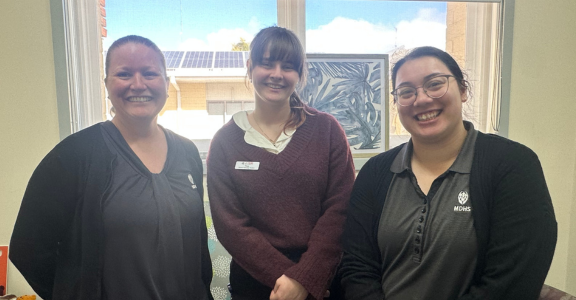
MDHS celebrates communication across every stage of life
Speech Pathology Week 24 – 30 August is a chance to shine a light on the essential role speech pathologists play in helping Australians of all ages communicate, connect and participate fully in life.
Speech pathologists work across the lifespan from supporting young children learning to speak, to helping adults recover communication skills after injury and assisting older people to eat and drink safely.
This year’s theme, “Impact through communication”, highlights the importance of communication as a basic human right.
“Everyone deserves a way to express themselves.
“Communication is essential to relationships, safety, learning and independence. When someone can be heard and understood, it changes their whole life,” said MDHS Speech Pathologist Darcy Lowe.
Speech pathologists are allied health professionals trained in communication, language and swallowing. They work in schools, early childhood centres, hospitals, aged care facilities, disability services, and private practices.
“Our work is incredibly varied.
“Over the years I’ve supported children to find their voice, and I’ve also worked with families, educators and allied health teams to build environments where communication is supported,” said MDHS Speech Pathologist Meagan O’Halloran.
It’s the relationships that really make the work meaningful.”
Many people are surprised to learn speech pathologists also support safe eating and drinking.
“Swallowing difficulties are common in aged care and post-stroke recovery.
“We help people eat and drink safely to improve their quality of life. From modified food and fluids to swallowing strategies and education, we’re here to support individuals and their families,” said MDHS Speech Pathologist Gillian Yeo.
Speech pathologists also educate families, carers and community members on how to support people with communication and swallowing needs.
“Even small changes can make a big difference.
“Remembering to slow down and use short, clear sentences can make a big difference for someone with a language difficulty,” said MDHS Speech Pathologist Caitlin Verlinden.
-continues-
Speech pathologists support people at all stages of life. Their work helps ensure that no one is left behind when it comes to communication and inclusion.
For more information or to make an appointment with the MDHS speech pathology team visit mdhs.vic.gov.au/allied-health/ to submit a self-referral form.